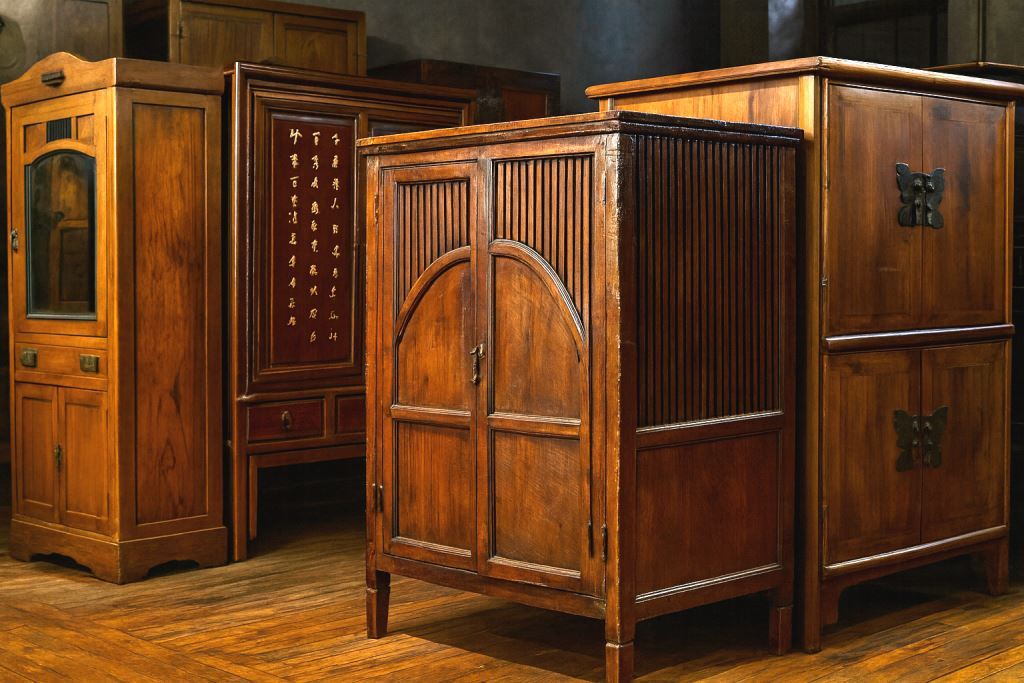

Few pieces of furniture have as much going on as a Japanese tansu. Traditional storage chests built from the Edo period onward — for merchants, samurai households, working families — they’re as functional today as they were three centuries ago. And unlike a lot of antiques, they’re genuinely useful.
If you’re thinking about buying one, here’s what actually matters.
What “Tansu” Actually Means
Tansu (箪笥) is the Japanese word for a freestanding storage chest — drawers, doors, or both. The category is wider than most people expect: it covers everything from small tabletop boxes to floor-to-ceiling stacking cabinets. What they share is a philosophy of making storage beautiful, and in many cases portable. A lot of tansu were designed to be carried or stacked, essential in a culture where households moved and possessions needed to travel safely.
The Types You’ll Actually Come Across
Isho Tansu (Clothing Chest)
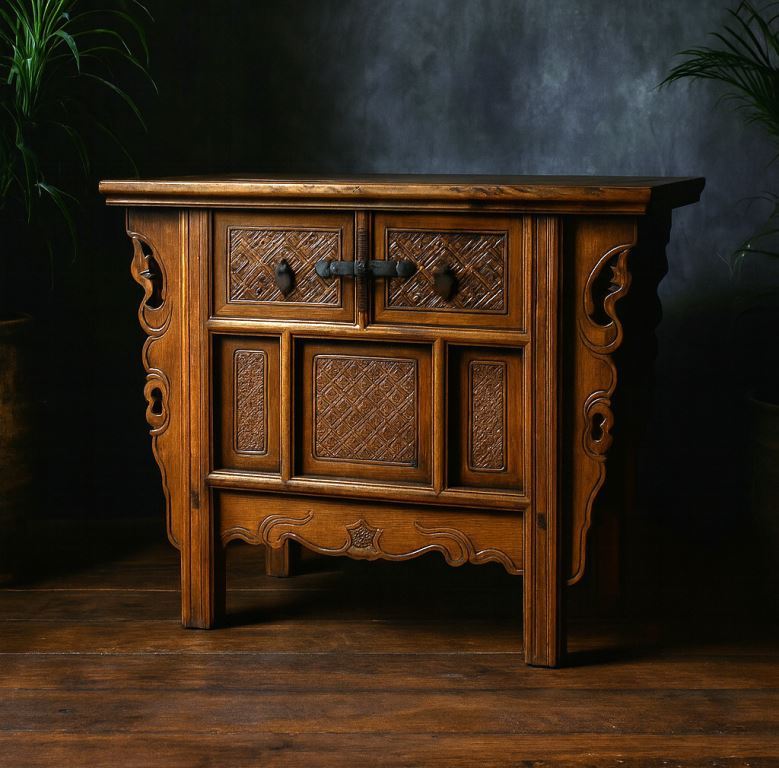
The most common. Deep drawers, usually with iron hardware, made for kimono and folded garments. These range from small two-drawer low chests to tall stacked cabinets. Great as a dresser, media console, or bedroom sideboard.
Kaidan Tansu (Staircase Chest)
Built as a functional staircase, with storage in every step. Rare and highly collectible. Dramatic as a room feature, and genuinely functional.
Mizuya Tansu (Kitchen Chest)
Designed for kitchen use — latticed doors for ventilation, divided drawers for utensils, often with a central work surface. One of the best bar cabinets you can own. The latticed doors ventilate spirits, the drawers hold bar tools, and the aesthetic is better than anything made today.
Funa Tansu (Sea Chest)
Built for merchants who transported goods by sea — reinforced with heavy iron hardware, often lockable. Some of the most impressive hardware details you’ll see on any antique.
Hon Tansu (Book Chest)
Smaller and lighter, made for scrolls and books. Good as a side table or desk accent.
What to Expect to Pay
Prices vary with age, condition, type, wood, and provenance:
- Tabletop and small tansu: $300–$1,500
- Mid-size clothing chests and step chests: $1,500–$5,000
- Large stacking cabinets and kaidan tansu: $4,000–$15,000+
- Museum-quality or particularly rare pieces: $20,000+
Meiji period pieces (1868–1912) are more common and more accessible than Edo-period (1603–1868) examples. Original hardware, no major repairs, and original finish all command real premiums.
What to Actually Look For
Hardware. Traditional tansu hardware — ring pulls, lockplates, corner fittings — was hand-forged iron or occasionally brass. Original hardware matters. Replaced hardware isn’t disqualifying, but it affects value.
Wood. Japanese tansu were made from sugi (cedar), kiri (paulownia), keyaki (elm/zelkova), or hinoki (cypress). Kiri is prized — naturally moth-repellent and surprisingly light. If a chest seems light for its size, that’s usually kiri, and that’s a good sign.
Joinery and construction. Traditional tansu used dovetail joints and hand-cut joinery. Drawers should slide smoothly and sit flush when closed. Look inside drawers and at the back panels — original hand-planed surfaces have a texture that machine-cut wood doesn’t.
Authentic wear. Consistent patina on wood and hardware, natural wear on edges and handles, slight shrinkage gaps in old wood. Artificially distressed pieces look uniformly worn rather than worn in the specific spots that actually see use.
How to Use One in Your Home
This is where people are often surprised. A large isho tansu works immediately as a dresser, a TV console, or a dining room sideboard. The natural tones of sugi and keyaki complement minimal and layered interiors equally well.
A step tansu works as a bookshelf, display case, and architectural feature at once — particularly effective in an entryway or along a living room wall. And a small tabletop tansu — jewelry box, desk organizer, curio cabinet — is one of the most accessible entry points into Japanese antiques at under $1,000.
Finding the Right One
FEA Home has sourced Japanese antiques for over six decades, with direct buying relationships across Japan. Our current inventory includes isho tansu, step tansu, mizuya chests, and smaller tabletop pieces in a range of conditions and price points.
If you’re looking for something specific — a particular size, wood type, or hardware style — we’re glad to help. Our team sources continually, and we’ll reach out when the right piece arrives.
Browse our current tansu and Japanese antique inventory →
Contact us with a specific request →