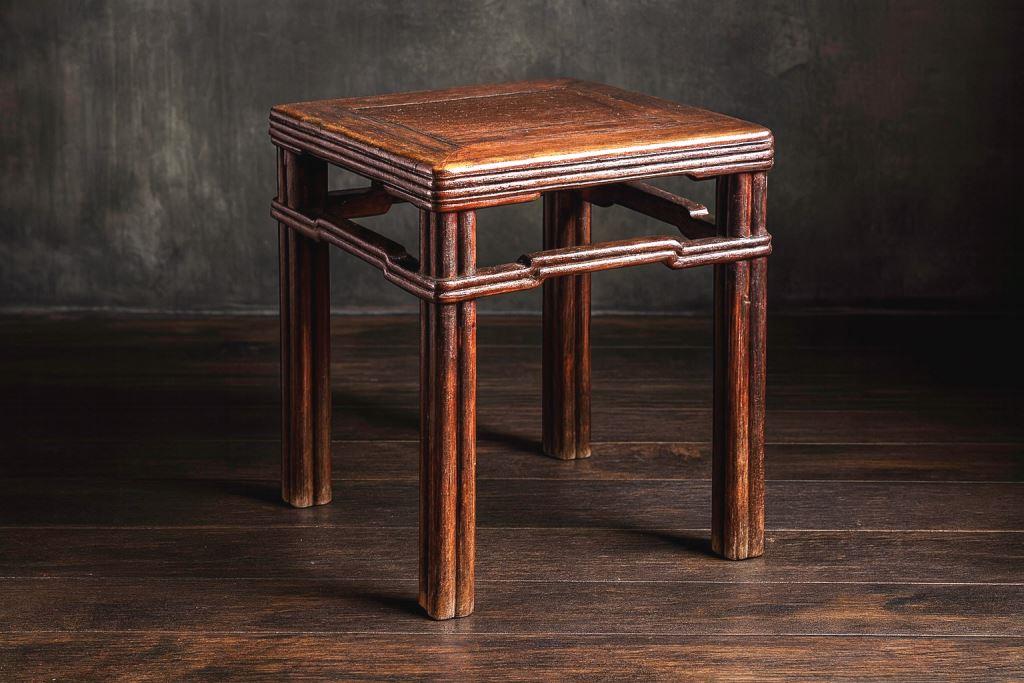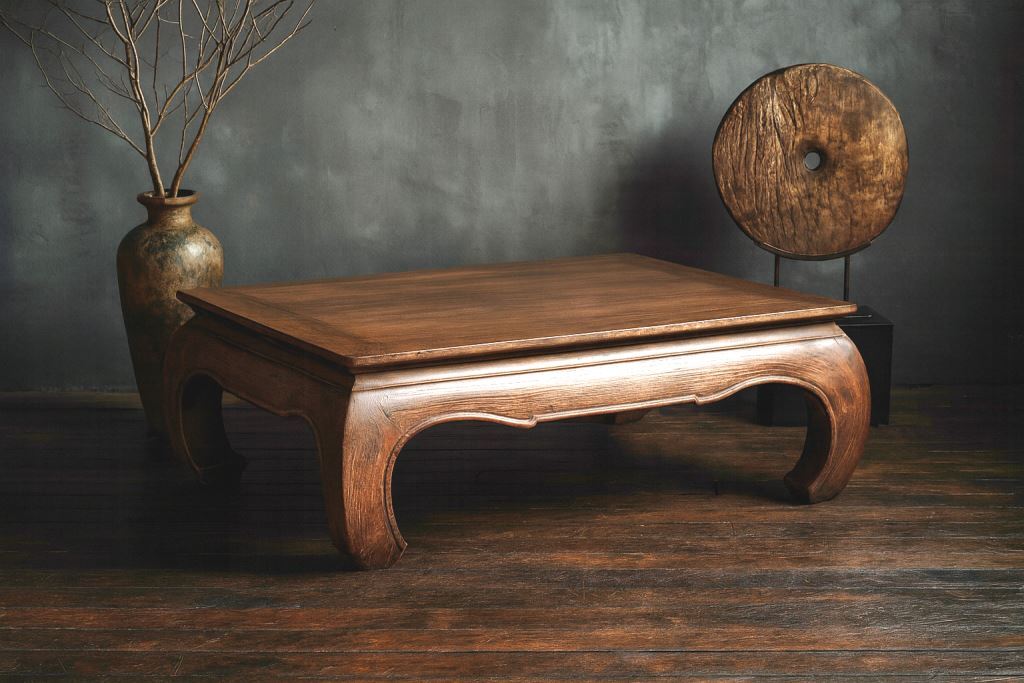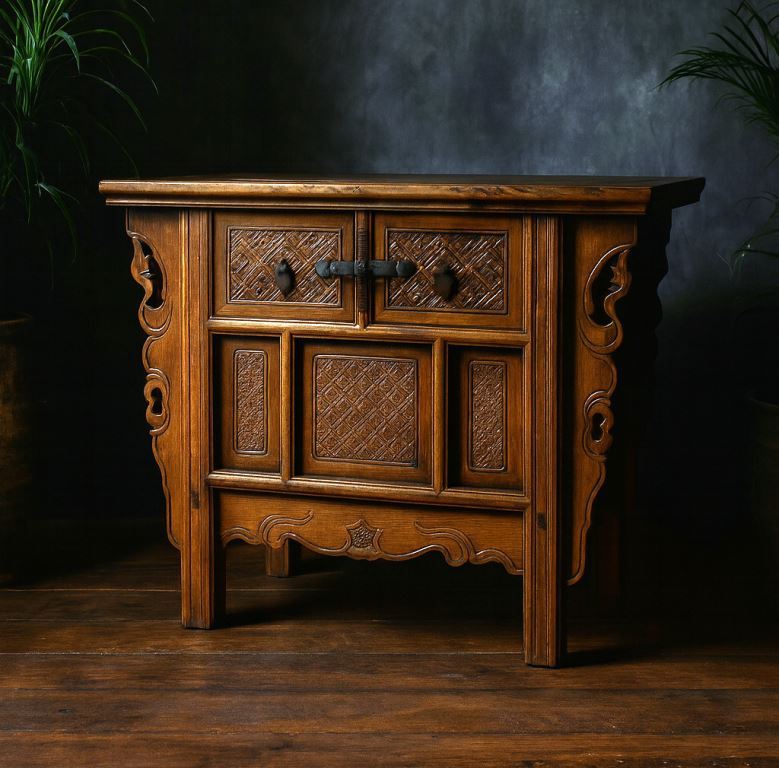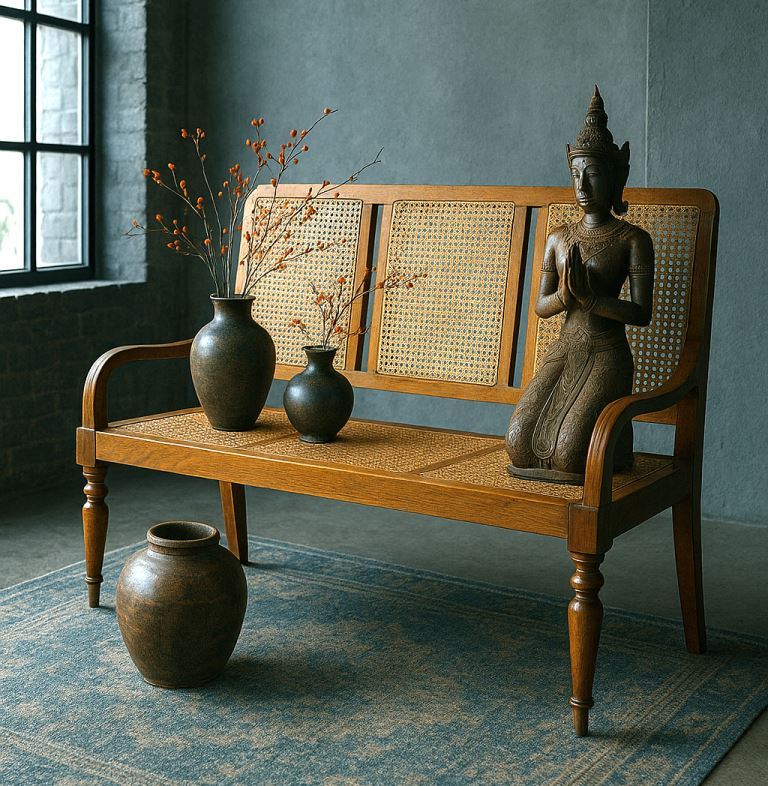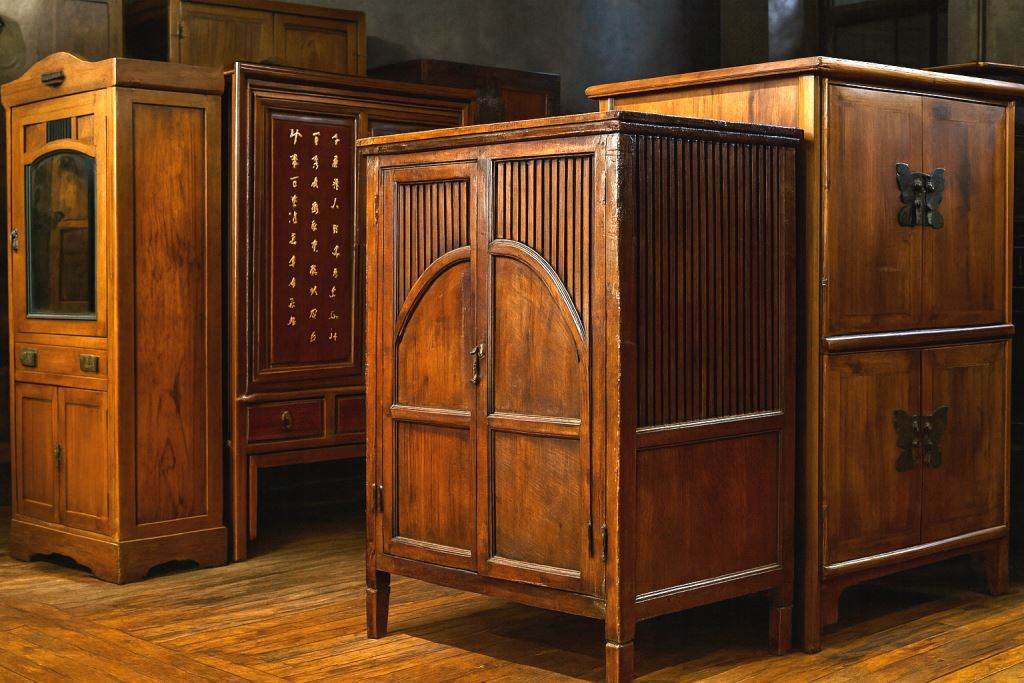

A well-made reproduction tansu chest can look convincing in a photo. It's only when you open a drawer, run a hand along the joinery, or check where the wear actually sits that the truth shows up. As tansu have become a popular design statement over the last decade, the market has filled with modern pieces built in the tansu style — some honestly labeled, some not. If you're spending real money on a piece for its history as well as its looks, it's worth knowing what to check.
Here are the five details we look at every time a tansu comes through our doors, and what each one tells you.

1. Start with the Joinery
Traditional tansu were built without nails or screws. Craftsmen relied on hand-cut dovetails and mortise-and-tenon joints to hold the piece together — joinery designed to flex slightly with humidity changes rather than crack.
Pull out a drawer and look at the corners. Hand-cut dovetails have small irregularities: the pins and tails aren't perfectly even, and spacing varies slightly from joint to joint. That's a good sign, not a flaw — it's the signature of hand work. A reproduction will typically show machine-cut joints that are uniform to the millimeter, or worse, will be held together with modern screws or nails hidden under trim.
2. Check the Wood
Antique tansu were built from a small set of traditional Japanese woods: kiri (paulownia), keyaki (zelkova), sugi (cedar), and hinoki (cypress) most commonly, often with a different, less expensive wood used for structural elements you don't see — drawer backs, interior panels — while the visible wood took the better material. That's a genuine construction choice, not a defect.
Real age shows in the wood itself. Decades of handling and light exposure darken and settle the grain unevenly, especially on drawer fronts and top surfaces. Reproductions are often stained to fake that look, but the stain sits evenly across the whole piece — it's too consistent, because a chemical stain doesn't know where a hand would have actually touched the wood over 80 years.

3. Study the Hardware
Hardware is one of the fastest tells. Original tansu hardware was hand-forged iron — hinges, drawer pulls, and corner plates made individually, which means genuine hand-forged pieces show hammer marks and small asymmetries up close. Regional workshops even had signature styles: Sendai tansu are known for especially refined ironwork, sometimes made by craftsmen who also made swords, while Sado Island tansu favored thick, heavy iron hardware with diamond-shaped pulls.
Cast or stamped modern hardware looks "too clean" by comparison — every pull identical to the next, edges sharp instead of softened by a century of use. Genuine iron hardware also develops a stable, dark patina over time, different from the flat black paint or artificial rust treatments used to fake that look on new hardware.
4. Follow the Wear
Wear patterns tell a story, and the story has to make sense. On a genuine antique, wear concentrates exactly where hands would have touched it for decades: around drawer pulls, along the edges people would have brushed past, on the top surface if it saw daily use. It builds up gradually and logically.
Artificially distressed reproductions tend to get this wrong. Look for dents or scuffs in places nobody would ever have actually touched, or wear that's identical on every drawer front rather than concentrated where use would naturally occur. If the "age" looks randomly scattered rather than logically placed, treat it as a red flag.
5. Look at What You Can't See
The back and underside of a piece are the parts nobody bothered to fake, historically, because nobody expected them to be seen. On an authentic tansu, the back boards are usually finished more roughly than the front — thinner wood, visible saw marks, less refinement — because craftsmen spent their time where it would show. Drawer bottoms should be solid, hand-planed wood, not plywood, which wasn't in common use during the periods most antique tansu were made.
It's also worth checking that the whole piece ages consistently. Occasionally a "tansu" on the market is actually a marriage — a top section and a base section from two different original pieces, put together later to make a sellable whole. If one section shows noticeably different wood tone, hardware style, or wear level than the other, ask about it directly.

A Quick Note on Regional Styles
Part of what makes tansu collectible is that they weren't mass-produced to a single design — different regions of Japan developed distinct approaches during the Edo and Meiji periods. Kyoto pieces often feature elegant lacquered finishes with floral motifs. Yonezawa tansu are known for chest-on-chest designs with cherry blossom detailing. Step chests (kaidan-dansu), merchant chests (choba-dansu), and clothing chests (isho-dansu) were all built for specific household functions, which is part of why proportions and drawer configurations vary so much piece to piece. None of that variation is a flaw — it's evidence the piece was actually built for a specific use, not turned out on a production line to look old.
When in Doubt, Ask to See the Details
Reputable dealers should be willing to show you close-up photos or video of joinery, hardware, and the back and underside of a piece before you buy — especially for a purchase you can't inspect in person. If a seller can't or won't provide that, treat it as a signal.
At FEA Home, every tansu in our collection is individually sourced and vetted by our team for authenticity, era, and condition before it reaches the showroom floor, and our full 25,000-piece inventory is available to view in person at our Yonkers, NY showroom, just outside New York City.

Shop our current Japanese Tansu collection →
Have a piece you're trying to authenticate, or questions about a specific tansu you're considering? Talk to a specialist — we're happy to help.
Frequently Asked Questions
How old does a tansu need to be to count as "antique"?
In the trade, "antique" generally means 100+ years old, while pieces from roughly the early-to-mid 20th century are more accurately described as vintage. Both can be genuinely old and hand-built — the distinction is about age, not authenticity.
Are all reproduction tansu bad?
Not at all — many are honestly sold as reproductions or "tansu-style" furniture and are well made. The issue is only when a reproduction is misrepresented as an antique. Knowing what to check protects you either way.
Can hardware be replaced on an antique tansu without making it less authentic?
Yes, and it's common — hardware takes the most wear over decades. A piece with one or two replaced pulls is still a genuine antique; ask the dealer to point out what's original versus replaced.
Where were most tansu made?
Production was spread across Japan, with regional centers including Sendai, Kyoto, Sado, and Yonezawa each developing recognizable styles in hardware, finish, and form.